Oscar-Nominee Sharpened His Powers of Observation at Rutgers
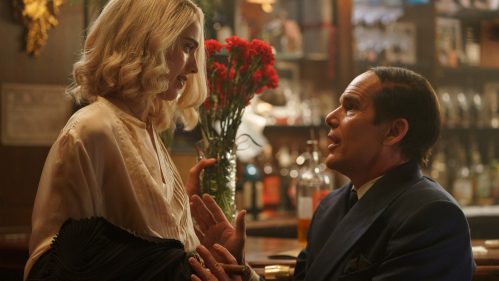
Rutgers graduate Robert Kaplow was nominated for best original screenplay at the Academy Awards.
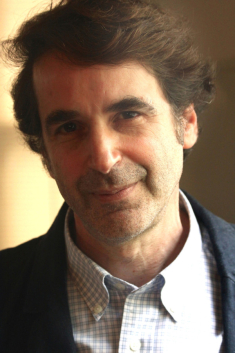
Robert Kaplow always knew he’d be a writer, but he wasn’t exactly sure how to go about it. The pieces came together at Rutgers in the 1970s, where he took as many literature and film electives as possible and spent his free time producing radio theater on WRSU.
It all paid off. Not only did Kaplow pursue a career as a high school teacher and novelist, but he also became a screenwriter.
Kaplow, who graduated from Rutgers College in 1976 with an English degree, was nominated for a best original screenplay Oscar for Blue Moon, directed by Richard Linklater. Ethan Hawke, who plays the lead role, was nominated for best actor as the gifted, lonely Lorenz Hart. For two decades, Hart, a lyricist, worked with Richard Rodgers to produce songs for Broadway and Hollywood. Before the theater-writing team of Rodgers and Hammerstein, there was Rodgers and Hart.
Like his characters, Kaplow, too, is enchanted with words. As a novelist and screenwriter, he falls under the spell of his own compelling stories, so much so that when he discusses his characters, it’s as if he’s talking about real people, with agency beyond his creative powers: “I think what he’s saying here is…” or “I think she understands that.”
Kaplow, who grew up in Westfield, New Jersey, and settled south of there in Metuchen, lived at Clothier Hall while attending Rutgers. Dorm life sharpened his powers of observation.
“It taught me things about people,” he says. “I got to Rutgers somehow, knowing I wanted to be a writer, that this was something I could do. But I didn’t have the technical chops yet.”
To remedy that, Kaplow took every literature and film course he could fit into his schedule. He is still amazed that he has managed to make a life with his words, noting that he and his college girlfriend, author Marian Calabro, “both wanted to be writers, and we both pulled it off.” His fascination with Orson Welles, the groundbreaking, volatile director of stage, screen, and radio, led Kaplow to WRSU-FM 88.7, the student-run radio station.
“I wanted to do a radio theater program,” he says, “as if I were Orson Welles.”
What developed was The Punsters, a goofy comedy ensemble and musical venture with his friends Tim Korzun, Michael Townsend, Carmen Presti, Ken Cohen, Lou Ippolito, and the late Marc Lanzoff. Kaplow said The Punsters’ style was influenced by mid-century radio programs such as The Goon Show and Firesign Theatre. In his senior year, Kaplow asked his professor, the author Betty Fussell, whether the radio show could count as an independent study. Fussell agreed. “So, I even got credit for it,” Kaplow says. “It was really generous of her to do.”
The Punsters also gigged in New Brunswick at the legendary Court Tavern and at The Golden Spike on Easton Avenue. After National Public Radio producer Jay Kernis liked their demo, The Punsters created segments for NPR’s Morning Edition from the mid-1980s to 2001, led by Kaplow as the zany Moe Moskowitz.
Unlike his alter ego on NPR, Kaplow is a soft-spoken, careful listener. He has kind eyes. If you were casting someone to be the supportive, inspirational teacher in a teen movie, Kaplow might be an apt choice. Indeed, Kaplow retired in 2014 after 34 years at Summit High School, where he was a beloved teacher with a creative approach to his AP English classes, such as having his students analyze the lyrics of the great American songbook, including those by Lorenz Hart.
“The atmosphere of a school appealed to me,” Kaplow says. “I understood the teenager that was still inside me. I really remembered what it felt like to be 17, and I could empathize with that.”
Many of Kaplow’s books center on young people, including Alessandra in Love (1989), and Alessandra in Agony (2023), set in the halls of Westfield High School, and Rutgers Girl: Naked in Italy (2022), the journal of a fictional 19-year-old freshman.
Kaplow’s zest for comedy and teen angst did not lessen his attachment to Orson Welles. The 2008 movie Me and Orson Welles, also directed by Linklater, was based on Kaplow’s 2003 historical fiction novel of the same name. The movie stars Christian McKay as Welles and Zac Efron as the teenager he impulsively casts as Lucius in the Mercury Theatre production of Julius Caesar. Claire Danes also stars as a young woman who intrigues both men.
Linklater bought a draft of Blue Moon shortly after Kaplow’s retirement. A 12-year tinkering process followed.
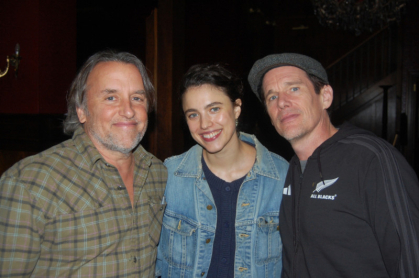
“I rewrote it at least twice every year during that period, from beginning to end,” Kaplow says. “About once a year or so, we three—Hawke, Linklater, and I—would re-read it, often in Hawke’s townhouse in New York. I’d sit there with a pen in my hand, and Richard would say, ‘You know, I think the audience has heard that already, you probably don’t need to say that.’ And they had a good sense of reality about that, they’d often say, ‘Well, Robert, wouldn’t he react when she says that? Wouldn’t she say something?’ That was good. It could be very well written, but it’s gotta sound like real people communicating.’’
As a writer, Kaplow said he is accustomed to being “invisible.” The Oscar nomination changed that.
“One of the things about the Academy Awards is that I’ve heard from these students from 30 years ago, saying, ‘Congrats,’ and ‘Your class made such a difference to me.’ I didn’t expect that people would notice, and then connect, ‘That’s the guy who taught me AP English.’”
Support Excellence
Consider a gift to the Scarlet Promise Initiative funds.