Rutgers Alumna Finds the Right Path
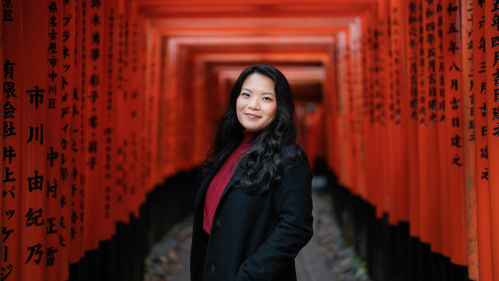
A decade after graduating from Rutgers with donor support, an alumna navigates her career, starting in medical research, then health care, and finally technology.
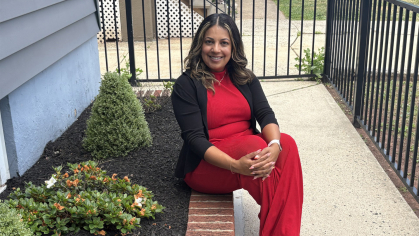
After graduating from Rutgers with plans to build a career in medicine and research, Jane Liang found herself on the front lines of health care during the COVID-19 pandemic. The experience ultimately led her to make a bold career pivot into technology, where she now leads large-scale enterprise implementations as a senior program manager.
Liang attributes her experience at Rutgers–New Brunswick for helping her succeed in her journey. Liang worked in the medical field for five years until 2021. Rather than starting over, Liang built on skills she had already developed through research, health care, and volunteer experiences—project coordination, communication, leadership, and problem-solving.
Today, Liang leads complex technology programs for enterprise customers, coordinating cross-functional teams, and helping organizations adopt new technologies. While the industry is different from health care, she sees many parallels between the two fields.
“I think life experiences are kind of cumulative,” says Liang, a first-generation college student who grew up in New York and New Jersey. Her mother came to the United States from Guangzhou, China, in the 1980s.
“Every experience doesn’t need to produce the exact outcome you imagined. It can still teach you something, shape how you grow, and prepare you for opportunities you never expected.”
Liang, who received numerous scholarships at Rutgers—many of which were merit-based, thanks to donors—says that even though she majored in cell biology and neuroscience, Rutgers helped her prepare for her new career in technology. These scholarships reduced financial barriers and also made opportunities like working in research at Rutgers and abroad in Hong Kong, helping an underserved community at a medical brigade in a remote area of Honduras, and volunteering possible. Four years at Rutgers helped her learn the skills she needed to succeed.
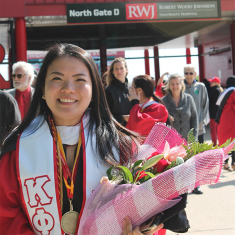
Liang, who was valedictorian of her Harrison High School class in New Jersey, now lives in Levittown, New York. She says she was able to transfer her skills, including organization, managing people, and meeting deadlines, to become a project manager. “I am not drawing blood or doing COVID tests anymore, but I think the general concept remains that you need to have a calm demeanor and you need to be comfortable working in ambiguous environments.”
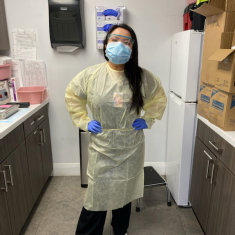
Looking back, Liang says working in health care during the height of the COVID-19 pandemic was both rewarding and challenging. With limited testing, protective equipment shortages, and widespread uncertainty, she often helped care for hundreds of patients each day. The experience reinforced the importance of staying calm under pressure and adapting quickly—skills she continues to rely on today.
Transition to Health Technology
Liang began working in health technology at Medidata Solutions, where she implemented software to improve the patient experience in clinical trials. “And I thought this was very interesting and really let me use my experience in the medical field and the research field to be an asset in the tech industry.”
This led to her current role as a senior program manager at Box, a software company.
“The core of the job is to make sure that you are able to cohesively get a lot of personalities in a single room together and spearhead that team for a united outcome,” Liang says. “Rutgers definitely helped me accomplish this part of my job.”
Summer Internship
One of the highlights of her Rutgers experience, Liang says, was a five-week summer internship at Hong Kong University of Science and Technology, where she was sponsored and worked in a lab focusing on the molecular basis of neuronal development and plasticity, neurodegenerative diseases, and drug discovery.
“It strengthened my problem solving, organization, and ability to work independently on complex projects,” she says.
Studying in Hong Kong was also a terrific experience, says Liang, who is fluent in Cantonese. “Living in Hong Kong for the summer also pushed me to become more adaptable and comfortable operating in a completely new environment,” she says. “Those skills have continued to benefit me throughout my career.”
Medical Brigade

Rutgers also provided Liang with an opportunity in Honduras. “The medical brigade gave me firsthand the experience of working with doctors and dentists,” and seeing how they treat patients, she says. “It was really kind of eye-opening because we were working in underserved communities. While the United States medical system isn’t perfect, it is much better than most other countries.”
The brigade traveled to and treated patients in a remote area six hours away from the closest hospital. “A lot of families would typically walk the whole way or take a bus,” she says. “It was very hard to get quality care for those families.”
The experience changed Liang’s perspective, she says. “A lot of times, when you are going through your day-to-day life, you forget about how grateful you are to even have food, water, and electricity.”
Rutgers Was Life Changing
Her years at Rutgers changed her life. “Rutgers has given me a lot of experiences from the scholarships to international travel, that I wouldn't have gotten otherwise,” Liang says, adding the university also provided her with lifelong friendships.
“I didn’t end up in the career I thought I would have when I started Rutgers, but every experience along the way turned out to be valuable,” she says. “Research taught me how to solve problems, health care taught me how to work under pressure, and those skills became the foundation for my career in technology.”
Support The Edge Fund
Please consider a gift to support the next generation of thinkers and creators whose achievements in art, sports, science, and technology redefine excellence.