Alumni Volunteers Make an Impact
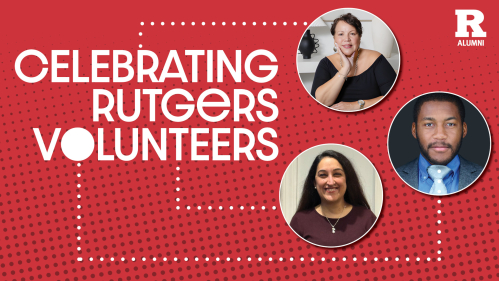
Rutgers volunteers value their experiences supporting the university community.
Tyrus Jackson started volunteering at Rutgers when he was a student.
Jackson, who received his bachelor’s degree in health administration from Rutgers–New Brunswick in 2017, is a health insurance specialist at Centers for Medicare and Medicaid Services in the Baltimore area.
As an alumnus, he continues his volunteer work with the Rutgers Club of Washington D.C., assisting students during Rutgers Scarlet Service, laying wreaths at graves of Rutgers alumni for Wreaths Across America, and helping with the Big Ten Table at the DC Pride Parade.

“The expanded experience of volunteering for Rutgers has helped me remember my career goals,” Jackson says. “I chose to work in government because I enjoy helping others.”
When you volunteer, you do not always see the outcome of your actions, but you are working toward “the greater good,” he says.
Volunteers Improve Skills
Volunteering also helps alumni improve their personal skills, advance in their careers, and become stronger leaders, says alumna Rosie Feliciano-Brown, who received her bachelor’s degree in psychology from Rutgers–Camden in 2004 and her master’s degree in 2017 from the Rutgers Graduate School–Camden.
“Volunteering for Rutgers University strengthened my leadership and communication skills in ways I didn’t fully appreciate at the time,” Feliciano-Brown says. “Being trusted to support initiatives, collaborate across teams, and show up consistently sharpened my ability to lead with confidence, accountability, and empathy—skills I now rely on daily in my professional life. It reinforced that service and leadership go hand in hand.”
Volunteering also helps alumni improve relationships with others.

“Volunteering connects you with people you may never have crossed paths with otherwise, and those connections often grow into mentors, collaborators, or lifelong friends,” Feliciano-Brown says. “As someone who grew up less than a mile from Rutgers University–Camden, I always knew I would attend the university, and my connection to Rutgers began long before I became a student or volunteer.”
Over the years, her love for Rutgers “has only deepened, especially through volunteering,” she says. “Giving back has strengthened my appreciation for the professors and community members who supported and guided me, making those relationships even more meaningful.”
Make Connections
Natasha Advani, a clinical pharmacist at Cooperman Barnabas Medical Center in Livingston, says she has enjoyed planning social events for the Rutgers Ernest Mario School of Pharmacy Alumni Association.
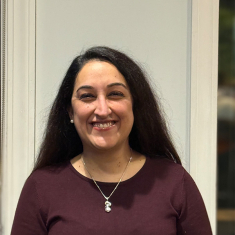
“Many members have mentioned how excited they are to have these opportunities to reconnect with fellow alumni,” says Advani, who graduated from Rutgers in 2011 with a doctor of pharmacy degree. “Connection and community are a great benefit to staying involved with Rutgers post-graduation.”
For busy alumni, Feliciano-Brown recommends alumni opportunities that are flexible, event-based, or annual commitments. These include Move-in Day, Homecoming, and Rites of Passage, all of which offer meaningful ways to support students and stay connected without a long-term time commitment.
“I’ve also been actively involved with the Rutgers University–Camden Alumni Association (RUCAA), which provides ongoing opportunities to give back and mentor,” she says. “I had the honor of serving as second vice president of RUCAA, where I saw firsthand the importance of alumni involvement.”
These experiences show that even small or annual commitments can strengthen the Rutgers community while fitting into a busy schedule, Felicano-Brown says.
“Volunteering is a mix of connecting with people and performing actions that make someone’s life easier or better,” Jackson says. “I think there is something for everyone and when you find something that you’re passionate about, you may even surprise yourself with how much you enjoy it!”
Get Involved!
Consider joining a Rutgers alumni volunteer opportunity.