A Family’s Inspiration to Cure Asthma
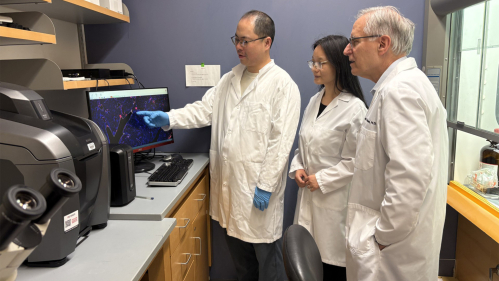
A father who hated to see his daughter and granddaughter suffer from asthma established a research fund to benefit asthma sufferers in future generations. The fund supports the work of a new research lab and its recent breakthrough of a new blood test to diagnose asthma at the Rutgers Child Health Institute of New Jersey.
When his daughter Janet Borrus was diagnosed with asthma at age 8 in 1966, New Jersey attorney Jack Borrus wanted to do more than just get her the necessary treatment. He wanted to improve the lives of all children with asthma, which ultimately would include granddaughter Eliana, for years to come.
Asthma, an immune and inflammatory disease which results in wheezing caused by tight airflow, runs in the Borrus family, with wife Adele suffering from it as a young child and later in life, and then ultimately passing it down to her daughter and granddaughter. This family affliction motivated Borrus to try to make a difference, and his efforts continue to support a Rutgers Health program that continues to have a long-lasting impact on children nationwide.
Borrus, who was on the board of the Rutgers University Child Health Institute of New Jersey, worked with Arnold Rabson, director of the institute and professor of pharmacology, pediatrics, pathology, and laboratory medicine, to develop and allocate a special fund to support asthma research in children. More than $1 million has been directed to asthma research since 1999 through the Dr. James J. O’Connell Fund, for which Borrus served as trustee for more than 35 years. The fund provides annual grants for medical research, treatment, and hospital support.
Borrus and members of his law firm Borrus, Goldin, Foley, Vignuolo, Hyman and Stahl, PC in North Brunswick, where he was a founding partner, as well as many of his clients, family members, and friends, also made donations to the fund. Borrus died in 2021 at age 92, following his wife, Adele Borrus, who died in 2019.
“Jack Borrus was an enormous supporter of the Child Health Institute, both through the fund and personally,” Rabson says. “After his passing, a laboratory was dedicated to him.”
Family Support for Fund
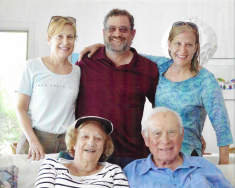
After their father’s death, Janet, Amy, and David Borrus decided to continue with their father’s legacy by supporting the fund. They said they were thrilled when Rutgers released a video in fall, 2025, detailing the latest research in child asthma with the unveiling of a new blood test to more easily diagnose asthma in children.
“Given our family’s history of asthma, my husband and I are extremely grateful for the groundbreaking research the Child Health Institute is doing, and we are pleased to contribute in a small way to further its efforts,” says Amy Borrus. Every time she took daughter Eliana to the emergency room of the Children’s National Hospital in Washington, D.C., she says, the waiting room was full of kids with asthma. Eliana probably had asthma at birth, but was not diagnosed until she was almost 2.
“Dr. Rabson’s world-class team of researchers is focused on understanding the causes of asthma and developing therapies to better treat and maybe prevent this disease that too many kids struggle with,” she says.
The fund, continued donations, and the research lab were “personally important to my father because I had asthma and because he saw his granddaughter suffer,” says Janet Borrus, who lives in Los Angeles.
“I remember that the process of diagnosing my own asthma and its causes was lengthy and uncomfortable, as was the fine-tuning over many years of treatment, from about age 9 to 16,” she says.

In fact, Janet Borrus, whose daughter Maya Grove graduated from the Mason Gross School of the Arts in 2025, recalls she was told that she needed an “oxygen tent” as an infant. From age 8 on she received weekly shots administered by a local pediatrician and made regular trips to see a specialist at the hospital. “To know that other children and their families will now have a much easier time coping with the disease is a wonderful relief,” she says. “And I’m so honored that my father’s efforts on behalf of the Child Health Institute of New Jersey and RWJMS, and now our continuing family contributions, played a part in this.”
In fact, it means the world to Janet Borrus “to see my dad’s legacy continue to help other people who share the experience of dealing with this really debilitating disease.”
She is grateful for the numerous breakthroughs made at the institute through its collaboration with the Robert Wood Johnson Medical Center. Diagnosing asthma in a child will be easier thanks to a simple blood test researchers developed to detect and assess its severity.
Collaborative Research Team
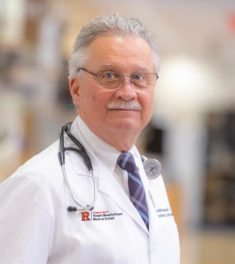
The childhood asthma research at the institute is part of a collaboration with Reynold A. Panettieri Jr., a world leader in asthma research and a professor of medicine at Robert Wood Johnson Medical School, and vice chancellor, clinical and translational science, and director, Rutgers Institute for Translational Medicine and Science, and his research team, Rabson says. Qi Yang, associate professor, Department of Pediatrics, and resident scientist, is also part of the team.
One out of every 20 people in the United States suffers from asthma, Panettieri says.
At this point, Panettieri is working to take the new blood test to market with patents, venture capital, and prototypes, which could take about three years, he says.
His research has also changed our understanding of the role of the airway smooth muscle, a thin layer of tissue that automatically tightens or relaxes to control how much air flows into your lungs, and the role it plays in asthma and chronic obstructive pulmonary disease, he says. This has helped him identify therapies that can relax airways and improve breathing. In addition, researchers are studying the role of viral infections in exacerbating asthma, as well as pharmacologic treatment for asthma, asthma’s response to and its resistance to drugs.
“With the support of the Borrus family, we have gotten critical early funding to help us springboard to get more federal funding as well as other philanthropic funds and venture capital,” he says. “We really have our own community at the institute, and that community is focused on one thing, helping pediatric patients and children and their families get over chronic illness.”
Borrus, who lived in North Brunswick, Princeton, and Harvey Cedars on Long Beach Island, was appointed chair of the board of directors of the Robert Wood Johnson University Hospital Foundation of New Brunswick in 2014. Previously, he had been vice chair and treasurer of the foundation, which strives to increase access to research, innovation, and specialty health care services for Central New Jersey residents.
Rabson says Borrus established the fund with the support of his law partners to finance medical research at many hospitals, including children’s asthma research at the institute. Borrus had also supported the Melvyn H. Motolinsky Foundation in memory of promising young lawyer Melvyn Motolinsky, who died suddenly from leukemia. The fund focuses on medical research in blood diseases.
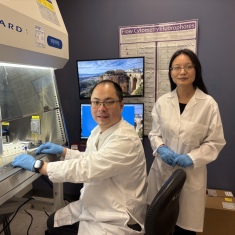
Rabson says he appreciates efforts of the Borrus children. “They continue to be supportive of our work, and they are wonderful people,” he says.
Janet Borrus says she experienced asthma from many allergens and went regularly for shots as a child. Today, she has only athletic asthma.
Her asthma, she says, was not as bad as her niece Eliana’s asthma.
“I think it is particularly meaningful when people have personal connections to the charities that they are donating to,” she says. “My family lives all over the country, but we still support this charity that our father funded because we all have personal histories with the disease.”
After seeing the progress in the asthma video, Janet Borrus says she is thrilled. “My parents, Jack and Adele, would be so proud! The new asthma blood test is a truly awesome breakthrough!”
Support Child Health
Your gift supports the mission of the Child Health Institute of New Jersey to improve the health of children everywhere by studying the causes of childhood illnesses and developing new treatments and preventions.